

The Developer Paradox: Why Enterprise CMOs Must Stop Writing Code to Lead Strategy
 By Varun Rathish
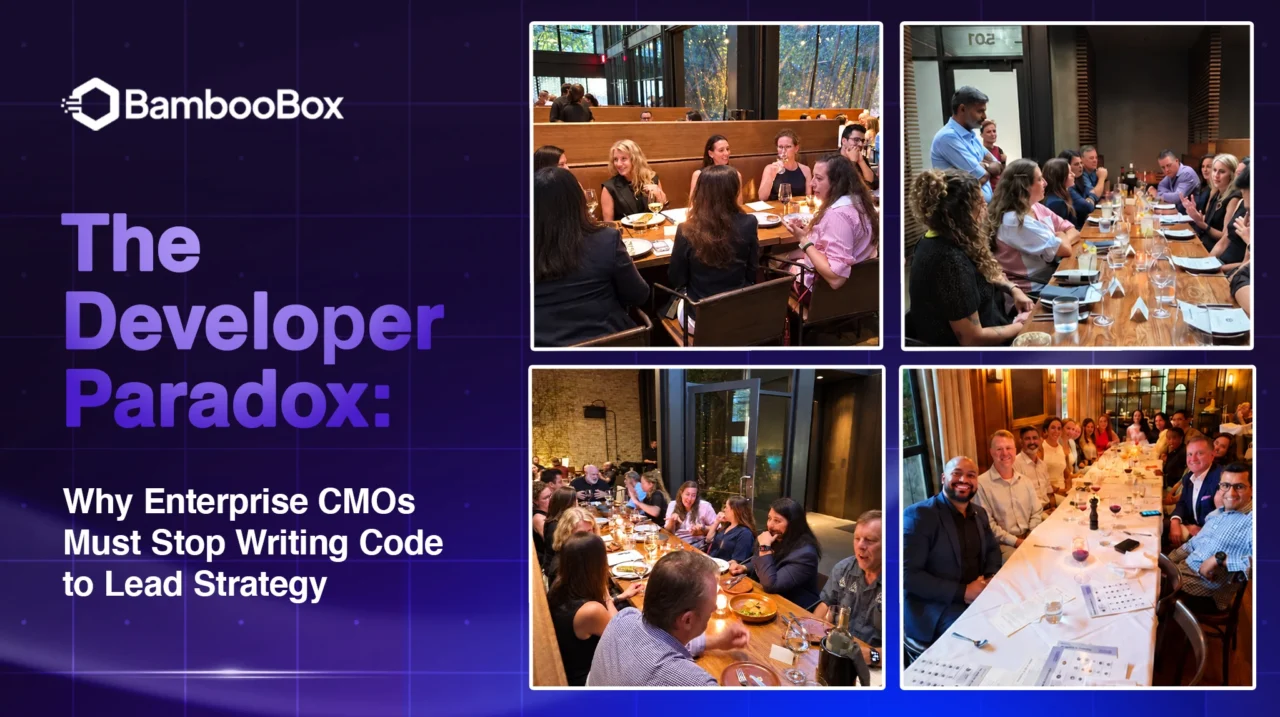
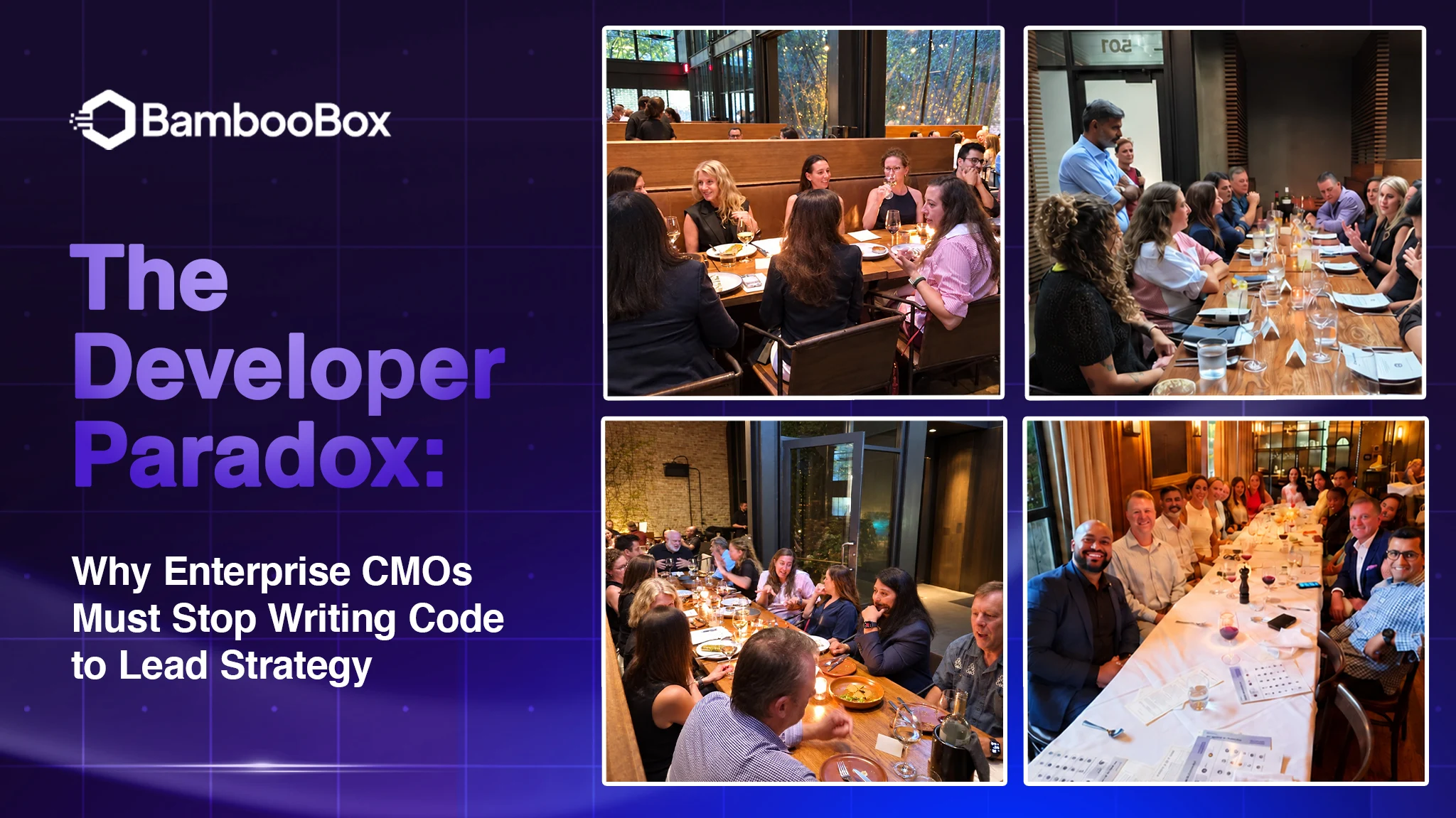
Instead of refining positioning, aligning with sales floors, and driving executive strategy, senior marketing talent is spending workweeks managing API keys, building prompt architectures, and debugging code in VS Code. This is The Developer Paradox, and it is quietly eroding enterprise strategic edge: AI expands what marketing teams can do; it can also pull leaders further away from the strategic work they are meant to lead.
What is the Developer Paradox in Marketing? The Developer Paradox describes how AI adoption can pull enterprise marketing teams away from strategic GTM leadership and into building, integrating, and maintaining technology. The solution is to align AI capabilities with an operating model that prioritizes execution, accountability, and measurable business outcomes.
Table of Contents
ToggleThe High Cost of DIY Stack Building
According to McKinsey’s The State of AI: Global Survey 2026, while 88% of organizations deploy AI within business functions, a mere 6% are capturing meaningful bottom-line value. The primary driver of this disparity is operational misallocation: enterprise teams build quick AI prototypes internally, only to hit severe scaling walls.
Furthermore, Gartner’s 2026 CMO Spend Survey reveals that overall marketing budgets remain constrained at 7.8% of total company revenue, even as CMOs allocate 15.3% of their spend to AI initiatives. While 70% of CMOs cite becoming an AI leader as a top imperative, only 30% report having the organizational maturity to scale autonomous execution.
Unstandardized workflows and lagging AI execution skills risk costing enterprise B2B organizations over $10 billion in lost value, according to Forrester’s 2026 B2B Marketing Research.
Voices from the Field: Austin & Atlanta Executive Consensus
To examine how growth teams are navigating this friction, 32 enterprise GTM leaders gathered across two off-the-record roundtables in Austin and Atlanta, hosted under the Chatham House Rule by AI-Native ABM Agency BambooBox.
At the Austin Executive Roundtable, moderated by Lisa Roberts, Chief Product & Growth Officer at Mercury, leaders tackled the operational bottleneck head-on.
“Content volume is up, but pipeline impact remains unproven,” noted one enterprise marketing executive during the Austin roundtable session. “If token costs are simply replacing FTE costs rather than driving revenue growth, we haven’t transformed our GTM motion, we’ve just changed our invoice line items.”
During the Atlanta session, facilitated by Alexandra Gobbi, CMO at Unanet, peer debate zeroed in on the build-versus-buy trade-off.
“We’ve reached a point where marketers are essentially becoming developers,” shared a revenue leader at the Atlanta dinner. “It’s an exciting shift, but we have to ask ourselves: is managing code and debugging workflows where a CMO’s bandwidth truly belongs?”
The room consensus across both tech hubs was definitive: while technical fluency is vital, forcing growth teams into tech-stack maintenance drags leaders back into the operational weeds. Modern GTM teams need plug-and-play execution, not another internal software project.
Reclaiming Strategic Capacity: Lead GTM, Don't Manage Pipes
The solution to the Developer Paradox requires a fundamental shift in the B2B operating model. Rather than forcing internal teams to code custom integrations or navigate point-solution fatigue, revenue leaders are aligning their operating models with organizational scale and maturity.
Operational leverage looks fundamentally different depending on team size and resource structure. For small to mid-sized organizations operating lean GTM motions, the real opportunity lies in Managed Agentic Execution, partnering with AI-powered agency models that take total accountability for program execution and pipeline delivery. For large enterprises with dedicated GTM ops teams, the shift is toward Composable Agentic Infrastructure, using pre-built platforms as foundational building blocks integrated with frontier LLMs like Claude to eliminate low-level code maintenance.
“When senior marketers spend their week debugging internal workflows, companies lose their strategic edge,” says Ankur Saigal, Co-founder & CEO of BambooBox. “Whether an organization opts for fully managed execution or orchestrates modular platforms in-house, the objective remains the same: liberate strategic talent from tech-stack maintenance so they can drive high-stakes revenue outcomes.”
When a unified context engine brings intent signals into a single source of truth and pairs it with managed execution, revenue teams bypass months of stack friction—deploying high-performing account-based plays in weeks rather than quarters.
As B2B buying motions become increasingly complex, growth leaders who break free from tech-stack maintenance will reclaim their strategic bandwidth. The future of marketing isn’t about learning how to code, it’s about commanding an executive narrative that moves the business forward.
Frequently Asked Questions
1. What should enterprise CMOs look for when evaluating an ABM partner?
- Outcome Accountability: Does the partner take responsibility for pipeline targets, or do they only sell software seats and billable hours (the core differentiator for outcome-driven platforms like BambooBox)?
- Unified Context Layer: Can the platform unify intent data across all tools into one shared account memory without manual data entry?
- Stack Integration: Does the solution work inside your existing CRM and MarTech stack, or does it force you to adopt another disconnected tool?
- Zero AI Plumbing Burden: Will your team spend time managing API keys and prompt scripts, or will embedded operators handle technical execution so you can lead GTM strategy?
2. What is an AI-Native ABM agency, and how is it different from a traditional marketing agency?
3. How long does it take to launch an ABM program and generate live pipeline?
4. Should B2B teams buy ABM software or hire an ABM agency?
- ABM Software (e.g., 6sense, Demandbase): Provides software licenses, but your internal team must build data pipelines, write orchestrations, and manage daily workflows.
- Traditional Agencies: Sell billable hours, but often lack deep technical integration with modern AI and MarTech stacks.
- DIY AI Stack (e.g., Clay + Claude + Zapier): Offers initial flexibility, but frequently leads to "The AI Plumbing Trap", forcing marketers to act like developers maintaining broken API scripts.
- Managed AI-Native ABM (like BambooBox): Combines an agentic AI platform (One Central Marketing Brain) with embedded operators (Forward Deployed Marketers) who run campaigns inside your existing stack and take direct accountability for pipeline outcomes.


